01 General description
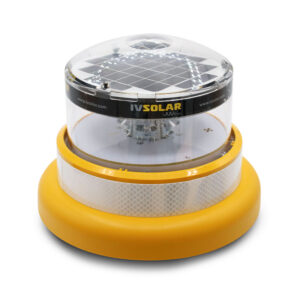
Solar powered beacon, designed for use in wind turbines, meteorological and telecommunications towers, cranes, chimneys, bridges or any structure up to 45m high. Also used in airports, marinas and ports.
It has the ICAO STAC certification for Type E low intensity beacons.
02 Features
-
 Low intensity <45m
-
 Intensity 32Cd
-
 Solar
Solar
Power source: Solar energy with built-in batteries (“All in One” equipment).
Operation: Autonomous beacon, during the day it recharges the batteries and the light switches on automatically at night.
Indicated for: Signaling of obstacles up to 45m high.
Autonomy:
Up to 200 hours (starting from a 100% charged battery)
Attention: The autonomy of the battery can be affected significantly depending on the weather conditions.
03 Configuration options
Configurator: Remote IV-CRF configurator option to change the mode and/or operation of the beacon.
Light colors: Red (standard), White, Amber, Green, Blue.
Mode: 20 flashes per minute, 30 flashes per minute, 40 flashes per minute.
Operation: Night only.
Twilight sensor: Integrated.
Flash synchronization: GPS synchronization option.
Fault alarm: Option, through “Dry contact” connectable to datalogger.
Telecommunications: It can be integrated into the IV-Manager System environment for beacon management and monitoring from a remote location.
04 Anchorages

Fijación lateral:
Fijación a tubo vertical (20 a 60mm de diámetro) o a pared.

“New Jersey” horizontal fixing:
For horizontal support (floor, wall crest, etc…).

“Fence” horizontal fixing::
For an horizontal structure (cranes, fences, etc…)

Fixation for aerodrome/airport deflector (45º inclination):
Special for runway head deflectors in aerodromes and airports.
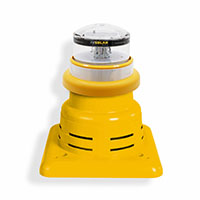
Cone support for fixing on the ground:
Used in aerodromes/airports, mines, etc. It can be attached to the ground with screws.
05 Request information
Complete the form and we will contact you as soon as possible.
06 It may interest you

04 Dec |
Events
On November the 26th a new technical meeting was held at the STAC-DGAC (Civil Aviation Technical Service) headquarters in Toulouse,…
+ info
30 Oct |
Low Intensity Beacon
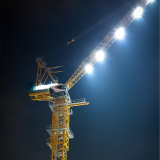
Solar beacons have become an essential solution to ensure safety and visibility on tower cranes. Thanks to their autonomous operation…
+ info